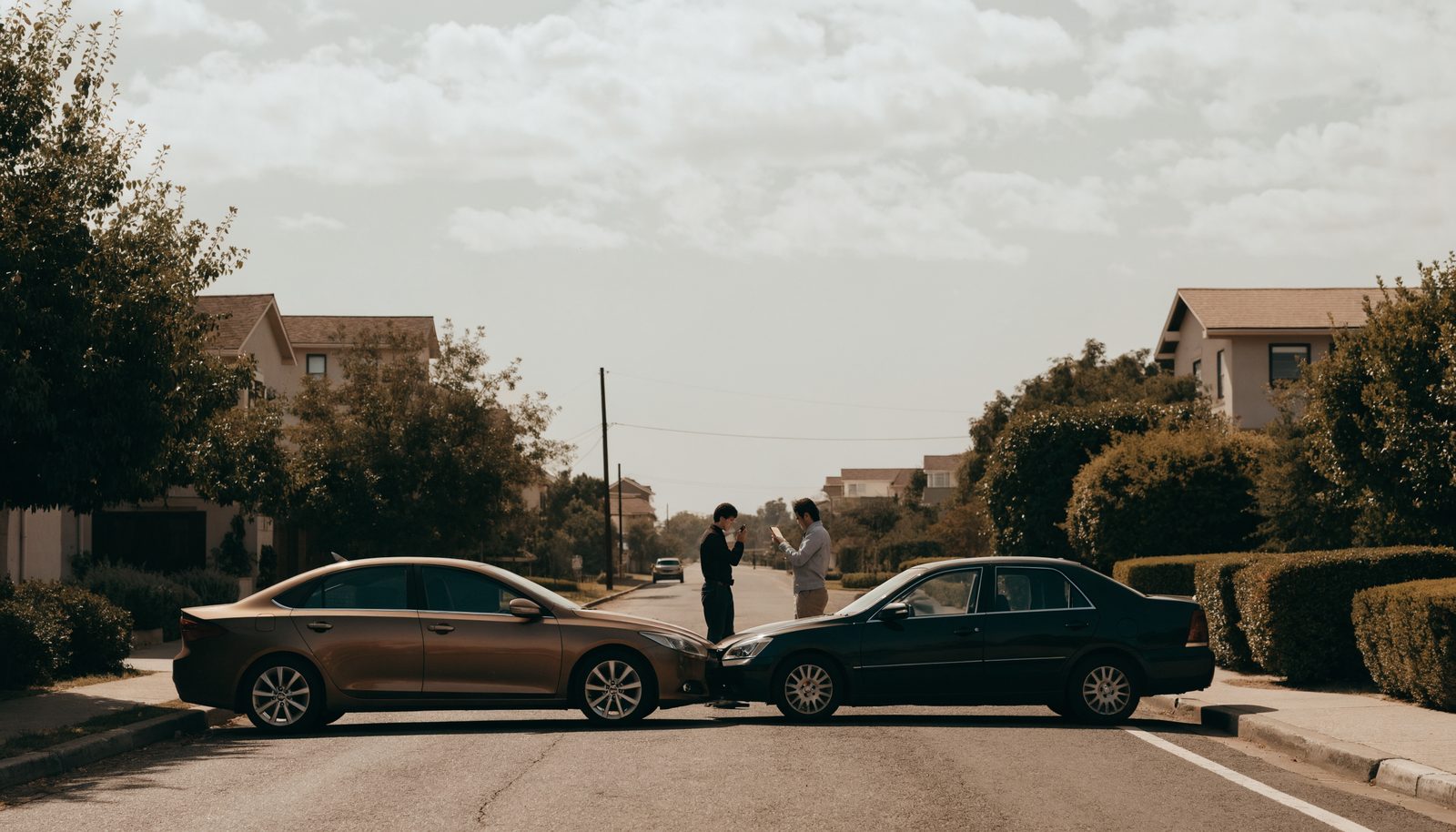
You are stopped at a red light on Ventura Boulevard. A driver looking at their phone never slows down and hits you at thirty miles an hour. Your neck is wrong for weeks, you miss work, and the bills start. Then the other driver's insurance card turns out to be expired, or there is no card at all. Who pays now?
This is one of the most common and most frightening situations we see, and the answer surprises people: the coverage that saves you is usually not the other driver's, and not even your collision coverage. It is a line on your own policy that many Californians were talked out of. Here is how it works, and why it matters.
The short version: in California, roughly one in six drivers has no insurance, and many more carry too little. Your own uninsured and underinsured motorist coverage is often the only real source of payment for your injuries. It is inexpensive, and you may have unknowingly declined it.
The California uninsured problem
Estimates put the share of uninsured California drivers at roughly one in six. Add everyone driving on the old minimum, and a large slice of the cars around you cannot come close to covering a serious injury. When one of them causes your crash, suing a driver with no assets and no policy is often a piece of paper you cannot collect on. That is exactly the gap uninsured and underinsured motorist coverage was built to fill.
UM and UIM, explained simply
| Coverage | When it applies | What it does |
|---|---|---|
| Uninsured motorist (UM) | The at-fault driver has no insurance, or is a hit and run | Pays for your injuries as if the other driver had carried coverage |
| Underinsured motorist (UIM) | The at-fault driver has insurance, but not enough | Fills the gap between their limit and your actual losses, up to your limit |
Both cover you, your family members in the car, and often passengers, for medical bills, lost wages, and pain and suffering. The claim is made against your own insurer, which is why the way you handle the first few weeks matters so much.
The trap: "full coverage" does not mean covered
People tell us all the time, "but I had full coverage." In the industry, full coverage usually means liability plus collision and comprehensive. That protects your car. It does nothing for your body when an uninsured driver hurts you. Uninsured and underinsured motorist coverage is a separate election. California law requires insurers to offer it, but it also lets you decline it in writing, and countless drivers signed that waiver years ago to shave a few dollars off the premium, without ever understanding what they gave away.
The fix takes one phone call to your agent. Ask two questions: do I carry uninsured and underinsured motorist coverage, and at what limit. If the answer is no, or the limit is low, fix it before you need it. Our coverage types guide walks through every line on the page.
What to do if it happens to you
- Call the police and get a report. A report documents the other driver's lack of insurance and the basic facts.
- Document everything at the scene. Photos, the other plate, any witnesses. Follow the full accident checklist.
- Get medical care and keep going. Gaps in treatment are the first thing an adjuster uses to shrink your claim.
- Be careful with your own insurer. A UM or UIM claim is still a claim, and the company on the other side of it is now yours. Do not give a recorded statement or accept an early number before you understand what your case is worth.
- Talk to a lawyer early. These claims have deadlines and notice requirements that are easy to miss. A short, free conversation protects your options.
You may have more coverage than you think
Before you assume no one will pay, let us read your policy. We often find uninsured motorist coverage clients forgot they had. Your consultation is free, and we work on personal injury cases with no fee unless we recover for you. English, Spanish, and Russian.
Talk to a Personal Injury LawyerThe bigger lesson
The drivers who recover after an uninsured crash are almost never lucky. They simply carried the right coverage before the light turned red. Read the full picture in our California auto insurance guide, and if a new driver shares your household, read the coverage and crash plan every parent needs.
This article is for informational purposes only and does not constitute legal or insurance advice. Coverage terms, limits, and outcomes vary by policy and by case, and prior results do not guarantee a similar outcome. Attorney Advertising. Contact MVP Law Group for guidance tailored to your situation.