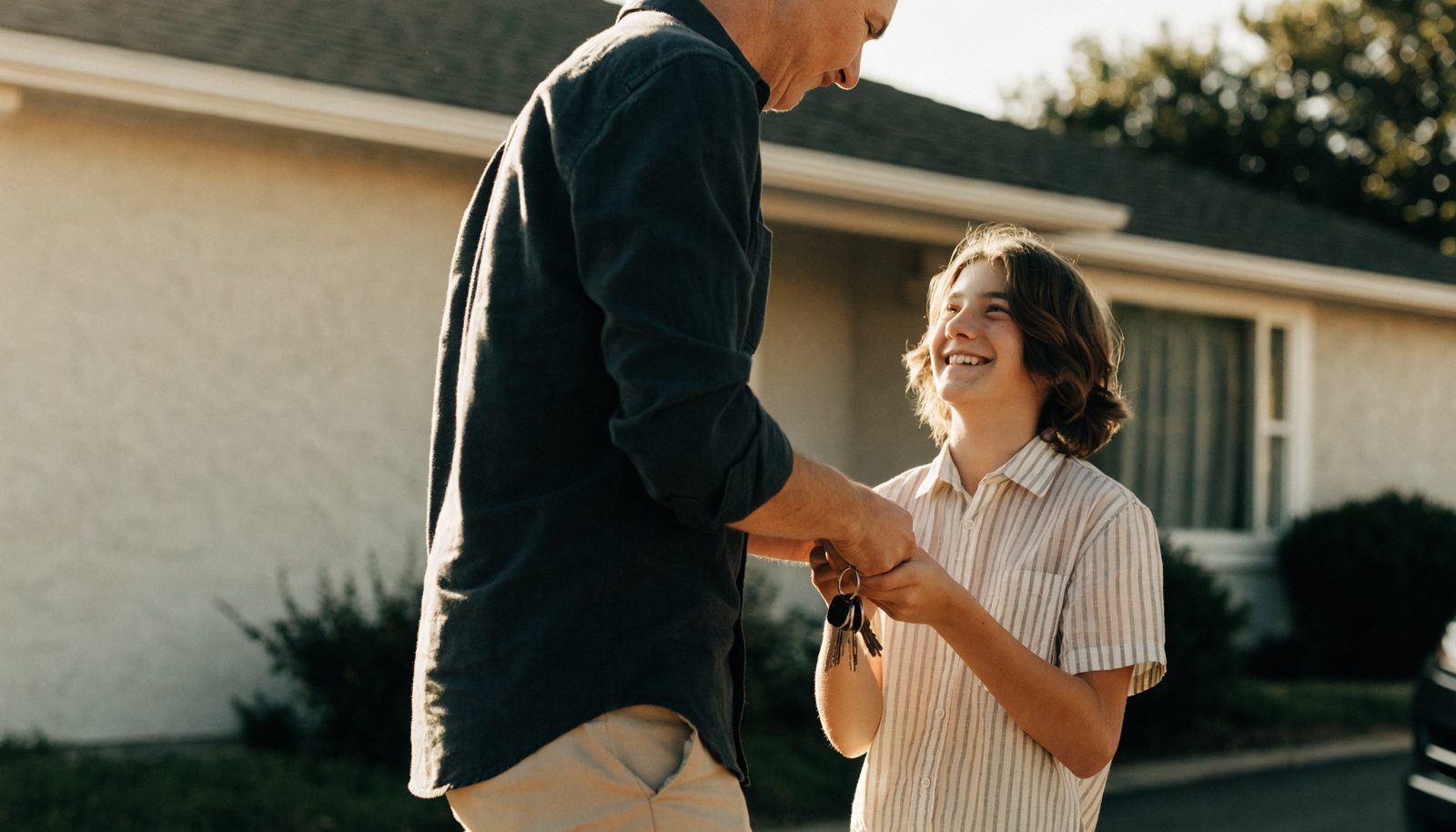
The day your child drives off alone for the first time is a strange mix of pride and dread. You taught them to look twice, to put the phone in the glovebox, to leave early so they never have to rush. What most families never do is have the other two conversations that matter just as much: the one about coverage, and the one about what to do if the worst happens on a Tuesday after school.
Here is both, in plain English, from a firm that helps California families after a crash.
The short version: a new driver does not just cost more to insure, they raise the amount your whole family could lose in a serious crash. The fix is not a lecture, it is the right limits and a simple, written plan your teen keeps in the car.
Why a teen changes the math, not just the price
Young drivers are involved in more crashes per mile than any other age group, and in California your teen usually drives a car titled to you, on a policy in your name. That means a mistake behind the wheel is not only their problem. When their crash injures someone and the bills run past your liability limit, the injured party can look to your income, your savings, and your home for the difference. The premium goes up because the risk went up, and the risk lands on the parents.
That is the reason the coverage conversation matters more the day a teen starts driving, not less.
The coverage that actually protects your family
Raise your liability limits, do not just meet the minimum
California's minimum is now 30/60/15, meaning $30,000 per injured person, $60,000 per accident, and $15,000 for property damage. For a household with a home and savings and a brand new driver, that minimum is thin. Higher liability limits, and often a personal umbrella policy on top, are the cheapest way to keep one bad afternoon from reaching everything you own.
Carry strong uninsured and underinsured motorist coverage
The scary part of a teen on the road is not only their driving, it is everyone else's. Roughly one in six California drivers is uninsured. If an uninsured driver hits your teen, your own uninsured and underinsured motorist coverage is often the only thing that pays for their injuries. It is inexpensive and it is essential.
Keep MedPay for fast medical bills
MedPay pays medical costs for your teen and their passengers no matter who caused the crash, and it pays quickly, before any settlement. For a carful of kids, that speed is worth a great deal on the day it is needed.
Decide on collision, comprehensive, and rental by the car
If your teen drives a financed or newer car, collision and comprehensive are usually required or wise. On an older starter car, you might carry liability only and self insure the vehicle. Rental reimbursement is a few dollars a month and keeps the household moving while a car is repaired. For a full breakdown of every term, see our coverage types guide.
The crash plan: what your new driver should do at the scene
A frightened seventeen year old on the shoulder of the freeway will not remember a lecture. They will remember a short list they have read a few times and keep in the glovebox. Walk through these with them tonight, calmly, the way you walked through looking both ways.
- Stop and breathe. Safety first. Never drive away. If the cars are drivable and in traffic, move them to the shoulder. Turn on hazard lights. Get yourself and any passengers somewhere safe, away from moving cars.
- Check for injuries and call 911. If anyone is hurt, or you are not sure, call 911. In California you must call police when there is injury, death, or major property damage. It is always fine to ask for help.
- Call a parent right away. You are not in trouble for calling us. Call before you agree to anything, sign anything, or accept cash to "keep it off insurance."
- Do not admit fault or argue. Say as little as possible about who caused it, even a friendly "I'm sorry." Fault is decided later, from facts. Be polite, stay calm.
- Trade information, do not chase it. Get the other driver's name, phone, insurance company, policy number, and license plate. Give the same. If they refuse or drive off, do not follow. Note the plate and description.
- Photograph everything. Both cars, all damage, the license plates, the street, traffic signs and signals, and any visible injuries. More photos are always better than fewer.
- Find witnesses. If anyone saw it, politely ask for a name and phone number before they leave.
- Get checked by a doctor. Adrenaline hides injuries. Neck, back, and head symptoms can appear a day later. See a doctor even if you feel fine, and tell a parent about any ache that shows up over the next week.
Print the pocket version and slip it into your teen's wallet or glovebox: the California accident checklist and wallet card.
Call us before you call the other driver's insurer
When a young person is injured, the other side's adjuster may call within days with a quick number and a form to sign. Talk to us first. Your consultation is free, confidential, and available in English, Spanish, or Russian.
Personal Injury HelpThe five minute checkup worth doing this week
Pull your declarations page, find your liability limits, and ask three questions: are these limits high enough to protect our home, do we carry uninsured motorist coverage, and do we have MedPay. If you are not sure how to read it, bring it to us and we will read it with you, in plain English. Start with our full California auto insurance guide, or compare carriers in our carrier comparison.
This article is for informational purposes only and does not constitute legal or insurance advice. Coverage terms and requirements vary by policy and carrier, and figures cited reflect California law as of 2026. Attorney Advertising. Contact MVP Law Group for guidance tailored to your family.